Spleen
Organ that filters blood and supports immune function.

The spleen is an organ found in almost all vertebrates, similar in structure to a large lymph node, acting primarily as a blood filter. It plays important roles in regard to red blood cells and the immune system, removing old red blood cells, holding a reserve of blood, and recycling iron.
- location
- Left upper quadrant of the abdomen, underneath the left part of the thoracic diaphragm
- length
- 7 to 14 centimetres (3 to 5+1⁄2 inches) in healthy adult humans
- color
- Purple
- blood_supply
- Splenic artery and short gastric arteries
- nerve_supply
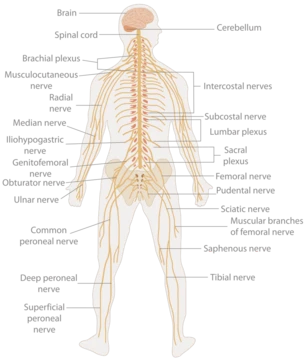
- Splenic plexus, connecting a branch of the celiac ganglia to the vagus nerve
Lore & Background
The spleen contains red and white pulp, which have distinct purposes contributing to adaptive and innate immunity. The white pulp houses T lymphocytes in periarteriolar lymphoid sheaths and B lymphocytes in follicles, allowing B cells to encounter blood-borne antigens and differentiate into plasma cells that secrete antibodies. The red pulp surrounds the white pulp and consists of venous sinuses and splenic cords, where actively phagocytic macrophages remove old or damaged red blood cells and other antibody-coated cells and pathogens. The red pulp also stores monocytes that can be mobilized to sites of tissue injury.
Reader's Guide
The spleen's significance lies in its dual role as a blood filter and a key component of the immune system. It removes old red blood cells, recycles iron, and metabolizes hemoglobin from senescent red blood cells into bilirubin, which is removed in the liver. As part of the mononuclear phagocyte system, its absence causes a predisposition to certain infections, particularly from polysaccharide-encapsulated bacteria. The spleen also stores a reserve of blood, valuable in cases of hemorrhagic shock, and stores platelets and lymphocytes. Enlargement of the spleen, known as splenomegaly, can result from various conditions including infection, obstruction of blood flow, hemolytic anemia, or infiltration by leukemia or storage diseases. Trauma can lead to splenic rupture, a medical emergency. Surgical removal of the spleen is known as a splenectomy.
Did You Know?
- The spleen is purple in color and located in the left upper quadrant of the abdomen.
- The spleen produces all types of blood cells during fetal life, but after birth erythropoietic functions cease except in some hematologic disorders.
- The spleen is derived from mesenchymal tissue, unlike most gut organs which are endodermally derived.
More in Human Anatomy 1-24
Elsewhere in the Human Anatomy universe
Spotted an error? Know more?
This is a living reference — every entry is fact-audited, and reader corrections feed straight into our audit queue. Suggest an edit · See this site's audit record